Saturday, 6 April 2019

Saturday


We left Canna early this morning under very atmospheric dark skies and perfect sea conditions for spotting fins. Unfortunately we could still here the sonar, even louder than yesterday. Only one porpoise was heard on the sonar. We headed to an area called Hawes Bank where there is usually lots of cetacean activity, nothing! 

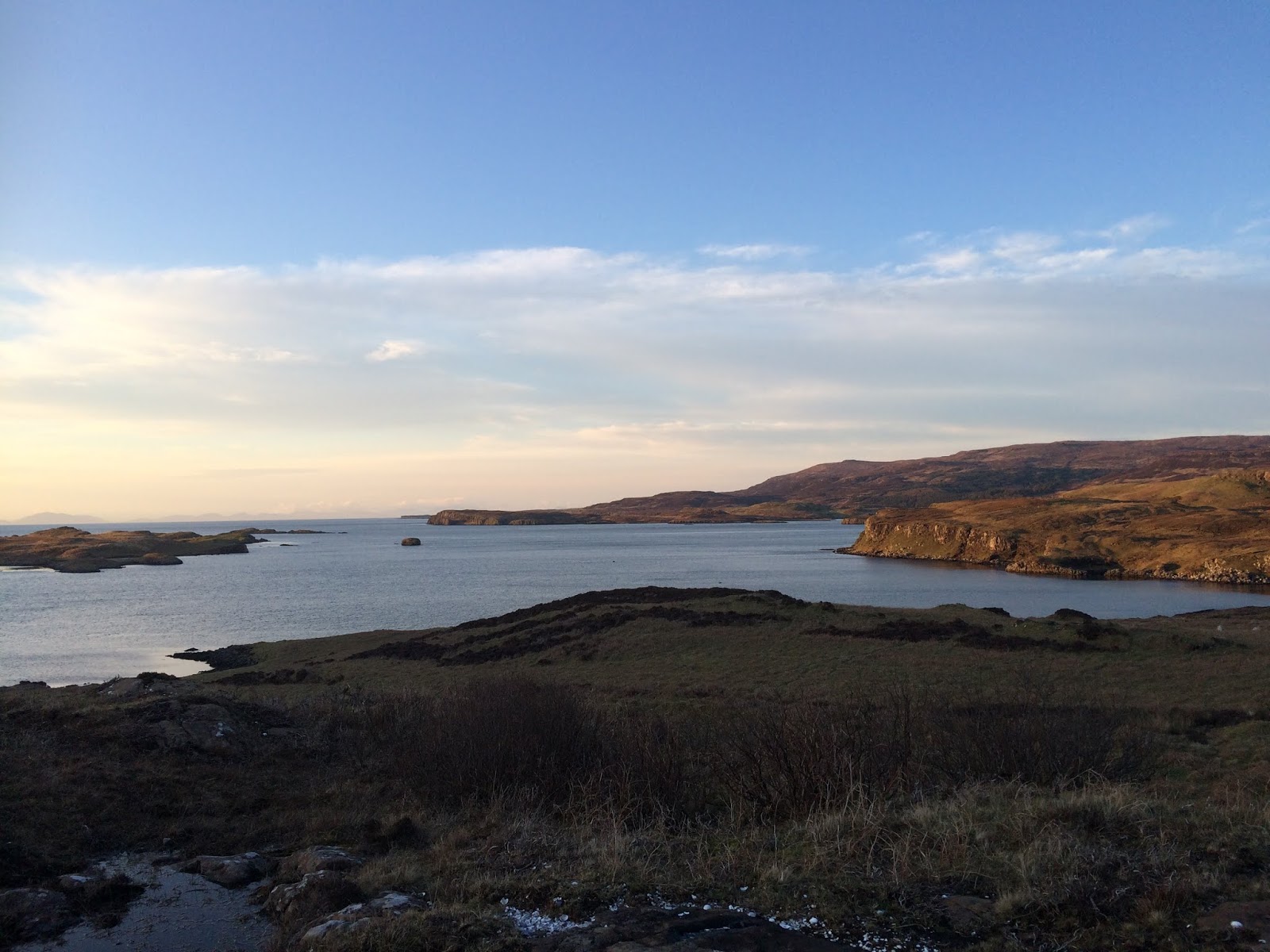
The sonar did stop in the afternoon however still no cetaceans. The skies were amazing, and the views of the islands, stunning.


 As we approached Tobermory, about 2pm, away from the more open water, we spotted a couple of harbour porpoises despite the sonar having returned. Two warships passed by the sound as we came in to anchor on the pontoon.


Friday


Beautiful day weather wise, with lots of sun and amazing cloud formations. We left Drunvegan bay and out into open sea, picking up increasing levels of sonar. The view of the snow capped black cuillins stayed with us for hours.

We saw a lot of birds, particularly razor bills, 520 were counted in one half hour shift!
Sonar showed military ships were relatively near by, with only one porpoise sounding.
After a few hours we came across the military, heralded by several aircraft flying overhead. We counted 5 ships altogether, 2 frigates, a destroyer, a supply ship and a marine assault ship; from different countries. Possibly up to 40 ships involved from many nations. The sonar was very loud until we left them far behind mid afternoon.

We continued round Skye, often managing to travel along a transects purely under sail. I got to helm under sail for an hour which was wonderful. 


About 4pm we turned towards the Isles of Canna and Sanday and moored in a beautiful bay with a sandy beach. 


All but the skipper went ashore (she stayed to cook 😆). I did a beach clean using the large bags and bins provided by the locals. Back to the boat at 8pm for our last evening meal on board and a game of 9 pieces of paper.

Today was probably the best food day. Porridge with my activated seeds for breakfast, fried mushrooms and vegan cheese on very nice white rolls for second breakfast, Chinese style ginger noodles for lunch, freshly made lemon cake for tea, sausages, mash, roast carrots and butternut squash with very mixed salad & avocado dressing for dinner.


With 3 vegans on board the food has been primarily vegan with sausages/bacon/eggs available at second breakfast for omnivores and some cheese at dinner. Other notable meals were a lentil dal with naan & fab salad and a homemade tomato based soup with freshly prepared focaccia. They say that as more and more volunteers are vegan they have decided to make their menu vegan with some extras for non vegans rather than vegan options. 

Thursday, 4 April 2019

More photos


Silurian in Loch Dunvegin


Loch Dunvegin


In the rib


Stormy skies and seas 


Thursday - Isle of Skye


All the sails up today on a port tack, with no engine. Glorious. Especially after a very rock & roll ride this morning heading into the force 7 northerly, with freezing drizzle. I felt quite seasick and happy to stand in the full brunt of the weather at the mast on lookout.

It was a very early start this morning and we travelled up the east coast of Skye and across the top, anchoring for the night in beautiful Dunvegan bay.

We’ve seen lots of sea birds, particularly while passing close by to the Shiants- uninhabited bird sanctuaries- guillemots, black guillemots, razor bills, fulmars, gannets, eider ducks, kittiwakes, various hills and puffins 😆. In this bay 2-3 common seals have come to look. Otherwise no marine mammal sightings or military ships 😏 We have heard their sonar and 3 fighter jets passed over. 

After about 9 hours of working we moored on Skye and most of us went in the rib to the shore. The views from the small hill were glorious, of Silurian in the bay and the Black Cuillin Ridge snow pink in the setting sun.

As I write this Necky and Chris are checking today’s hydrophone recordings; already about a dozen harbour porpoises detected in this morning’s trace - we didn’t see any of them! But the sea state was pretty wild.


Silurian at anchor waiting for the rib to return 


Wednesday, 3 April 2019


At anchor tonight in Churchton Bay, Raasay, looking out over the Isle of Skye.

Seas have been like roller coaster this afternoon. With atmospheric mountains on either side, snow peaked, in and out of cloud. No cetaceans, lots of birds, and our first military sighting, a submarine helicopter. We were passing over very deep water. 

A highlight, passing  under the Skye bridge, a contentious construction, bringing both income and more a lot more visitors to Skye. 

Now drinking mulled wine while my dinner is being prepared. Fortunately 2 other vegans aboard so menu is vegan with optional local meat second breakfasts for everyone else.

Skye Bridge

Really enjoying the colours of the hills


Wednesday 2


Wrapped up ready for watch duty
Tide behind us, but wind in front, tossing showers of salty water over us as we stand at the mast scanning the sea for any signs of marine mammals (and the buoys that act as creel markers - creels are lobster/crab/prawn pots).
We are 6 volunteers on a 3 hour rota. Half hour per session. 
First session on starboard side of mast, scanning starboard front quarter. Second session on port side doing same. Third and fourth half hour sessions, time off to recuperate or sunbathe 😂
Fifth half hour session, on relay and bird/boat watch sitting by door relaying sightings from whale watchers and noting all seabirds & boats. Sixth half hour session down in science station logging weather/sea state and acoustic (we’re trawling a 100m hydrophone) information onto computer every 15 minutes and any sightings received from relay.

There are 4 crew. The skipper, Emma, First mate, Brian, Science officer, Becky and science/ship hand, Chris. Brian & Chris do breakfasts (two breakfasts 8am and 11am) & lunch, we do clear ups, boat cleaning and dinners. We’re not directly involved in the sailing, however we can do so during our ‘break’ if we like. I did some helming yesterday and Emma commented how good I was, must have been the excellent training on eXXpedition. We have sails up for stability, but using engine for power. 


Wednesday 1


Sheltering in Sandaig bay, Loch Nevis, while a right hoolie blows (gale force 9 in open water). Making good use of the time playing ‘who am I?’ using cards with local sea mammals and birds.

We are 6 volunteers, all involved in marine studies; 4 marine biology students and a MMO (marine mammal observer). I asked everyone if they had their own research vessel (and funding etc), what would they research. Almost all said some aspect of whale research. Mostly studying the whales themselves, one studying the feed sources of whales. 

This prompted me to ask ‘why whales?’ Why are whales important. Some great answers.

Like other apex species, such as tigers, looking after them naturally means their environment is looked after and preserved, ie our oceans.
Secondly, whales offer a unique service to the oceans’ nutrients: many whales dive incredibly deep to feed on squid etc which live on the ocean bottoms. Obviously whales need to surface to breathe, and as they do they defaecate, which provides an incredibly rich nutrient source for the micro organisms, such as plankton and krill. So whales are effectively bringing nutrients up from the ocean floor to the surface where they become available for other marine species. 


The view of remote mainland (only accessible by boat or on foot) from the saloon